

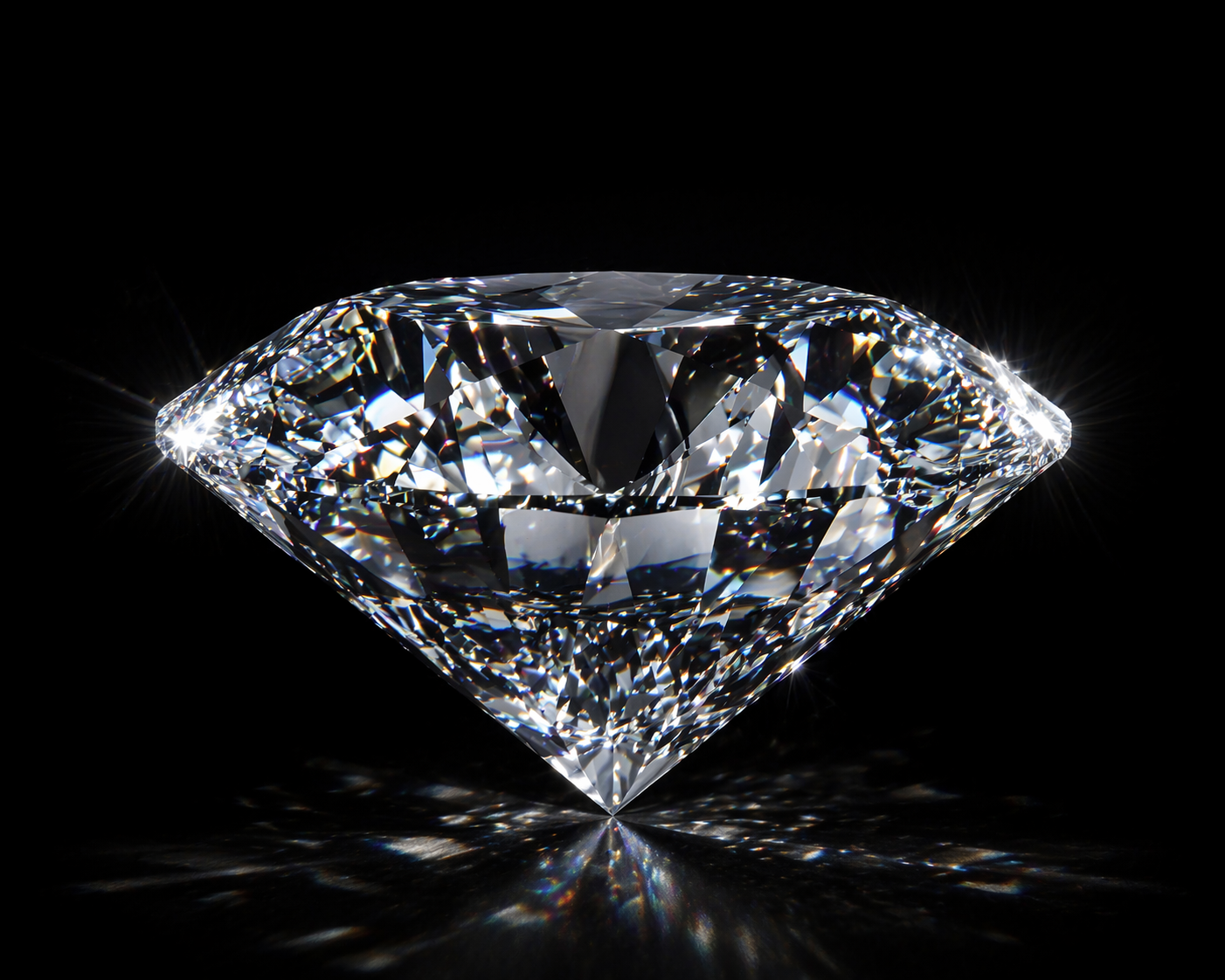
Start with shape
Shape has the greatest effect on the personality of a ring. Round diamonds are known for consistent brilliance. Ovals, pears, marquises and elongated cushions create more finger coverage. Emerald and Asscher cuts have broader flashes and expose clarity more readily. There is no universally best shape; there is only the shape that works for the design and wearer.
Use the 4Cs in the right order
Cut and visual performance
Cut determines how effectively a diamond handles light. For fancy shapes there may be no single cut grade, so videos, facet pattern, bow-tie strength, outline and proportions need to be assessed together.
Carat and dimensions
Carat measures weight rather than visible size. Compare length, width and depth. A heavy stone can hide weight underneath, while a well-proportioned diamond of the same carat may appear larger from above.
Colour
Colour should be judged in context. Metal colour, stone shape and personal sensitivity all affect what is visible. Paying for the highest grade is not automatically the best use of budget.
Clarity
The practical target is usually a diamond that appears clean without magnification. Inclusion type and position matter. A lower clarity grade can sometimes look excellent, while an unfortunate inclusion can undermine a higher grade.
Check proportions without worshipping numbers
Table, depth and length-to-width ratio are useful screening tools. They help remove obvious poor candidates, but they cannot describe every facet relationship or predict beauty by themselves. Use proportions to narrow the list, then inspect good video and imagery.
Look for the common problems
- A distracting bow-tie across an oval, pear or marquise.
- Windowing or weak contrast in step cuts.
- Uneven shoulders or an awkward outline.
- Excess depth that adds weight without useful size.
- Hazardous inclusions close to an edge or setting point.
Compare the diamond in the intended ring
A stone is not chosen in isolation. Its dimensions must suit the side stones, band width, setting height and the wearer’s finger. LADFOX presents suitable options and explains why one is stronger, rather than sending a long unfiltered list.
Quick answers
What matters most when choosing a diamond?
Start with shape, then look at cut and visual performance, carat and dimensions, colour and clarity. A grading report is an important baseline, but two diamonds with matching grades can look surprisingly different, so the stone itself should be assessed too.
What is a bow-tie in a diamond?
A bow-tie is a darker shadow across the middle of some elongated shapes, such as ovals, pears and marquises. A distracting bow-tie is one of the common problems to look for, so good video and imagery matter.
Which diamond grading reports does LADFOX prefer?
LADFOX generally looks for IGI grading reports for lab-grown diamonds and GIA grading reports for natural diamonds, then assesses the individual stone beyond the report.